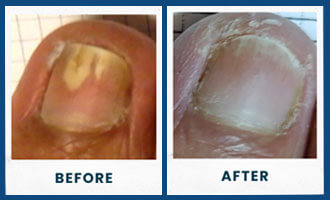
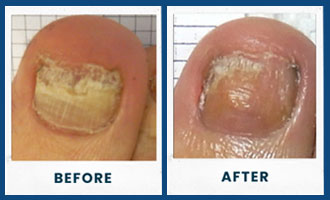
The area of the toes is generally warm and damp, unfortunately making it a great area for fungus to grow. If left untreated, the fungal infection can spread, which is why it’s so important to get professional help early on and look into your treatment options.
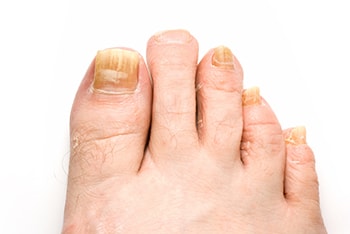
Fungal infections occur due to fungus getting through the cracks of the toes or cuts in your skin. Common signs that you may have a fungal infection include thicker than normal toenails, oddly shaped toenails, discoloration, a yellowish hue to the nail, and separation of the nail and nail bed. Fungal infections can affect anyone but are most common among men, those with diabetes or athlete’s foot, and smokers. The risk of having toenail fungus also increases as you age, if another family member has it, and if you have a weaker immune system.
To avoid getting a fungal infection, it’s important that you wash your feet daily with soap and water, making sure to get in between your toes, and dry the feet well. When cutting your toenails, make sure the clippers you’re using are clean and that you’re cutting straight across. It’s also important that you wear shoes in areas where fungus can thrive, such as wet public places like swimming pools or locker rooms.
If you believe you’re experiencing a fungal toenail infection, we recommend that you speak with a podiatrist as soon as possible for a proper diagnosis and suggested plan for treatment.
Care by Mikhail Burakovskiy, DPM & Crystal Beckman, DPM
Dr. Mikhail Burakovskiy and Dr. Crystal Beckman provide advanced foot and ankle care built around one goal: helping patients move comfortably, recover confidently, and return to the lifestyle they enjoy. Dr. Burakovskiy is a board-certified foot and ankle specialist with more than 20 years of high-level medical experience, including work with athletes and Olympic-level competitors, while Dr. Beckman brings advanced surgical training, sports medicine expertise, trauma care, wound care, limb preservation, and a patient-centered approach to every treatment plan.
With podiatry offices in Boynton Beach, Plantation, and West Palm Beach, One Stop Foot and Ankle Care serves patients from West Palm Beach, Delray Beach, Boca Raton, Lantana, Lake Worth Beach, Ocean Ridge, Gulf Stream, Hypoluxo, Wellington, Greenacres, Fort Lauderdale, Sunrise, Davie, Cooper City, Lauderhill, Lauderdale Lakes, Weston, Pembroke Pines, Miramar, and surrounding Palm Beach County and Broward County communities.
Fungal toenail infections can often be seen with the naked eye because they change the appearance of the toenail. If you have toenail fungus, the affected toenails may change in texture, becoming thickened, brittle, or crumbly. They can also become discolored, usually turning yellow, white, or brown. In more severe cases, the nail can become deformed, separate from the nail bed, and even emit a foul odor. In addition to being unsightly, toenail fungus can also cause pain, especially if infected nails rub against your shoes and socks.
Toenail fungus is highly contagious. It can spread from one nail to the next, especially if left untreated. It can spread from an infected surface, like the floor of a public pool, to the nails. It can also spread from person to person through direct contact or sharing personal items like shoes, socks, or pedicure tools.
Toenail fungus can be treated with topical or oral antifungal medications. Topical medications are applied directly to the nail. They usually come in the form of a cream or nail polish. Oral antifungal medications are taken by mouth. Laser treatments for fungal nail infections are becoming an increasingly common treatment option. Laser treatments use a concentrated beam of light to kill the fungus beneath the nail. Your podiatrist may recommend doing multiple forms of treatment simultaneously to get better or faster results.
Unfortunately, curing toenail fungus is a lengthy process. Not only will you have to wait for the treatment to kill the fungal infection - you will also have to wait for new, healthy toenails to grow out. This can take several months.
How the Lunula Laser Works
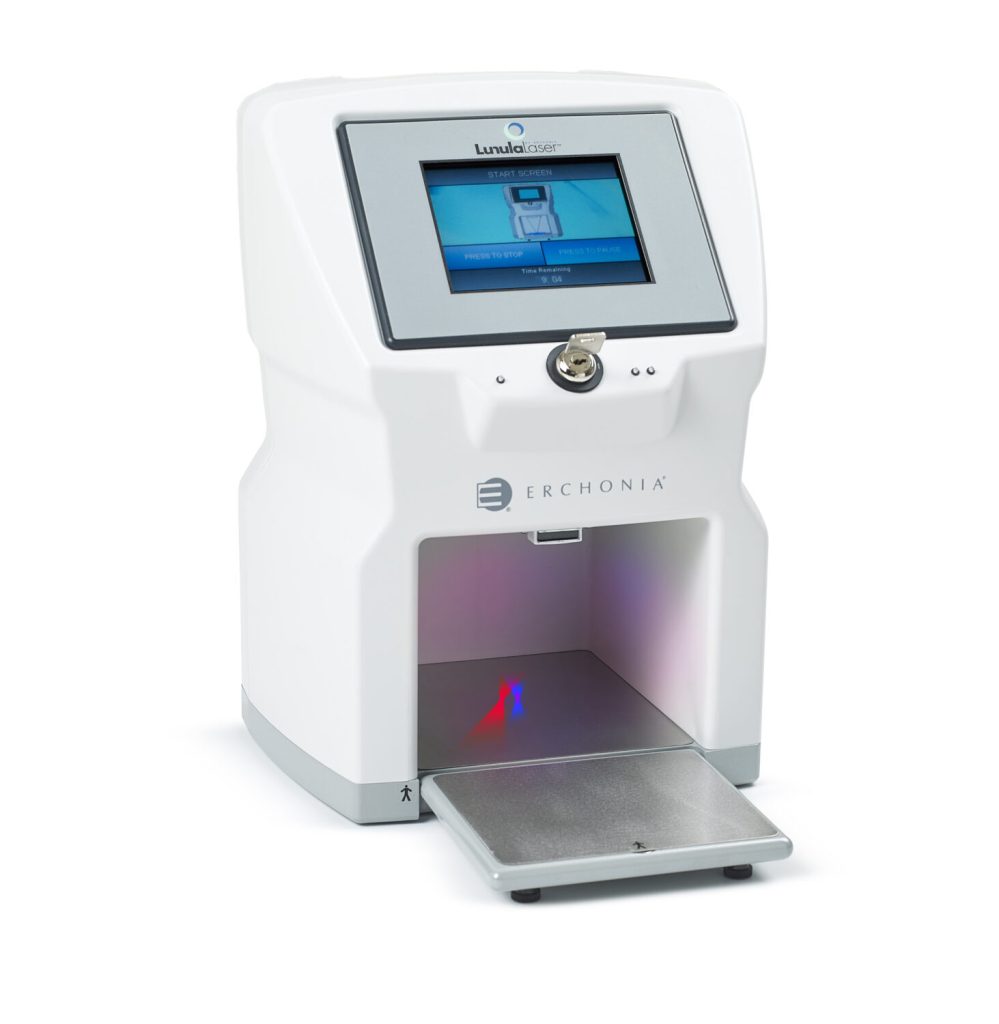
The Erchonia non-thermal Lunula Laser is an effective tool for treating onychomycosis (toenail fungus). Research has shown that the Lunula Laser significantly increases clear nails over a six-month period. By targeting the fungus and stimulating new clear nail growth, this patented red and violet visionary laser delivers an innovative, multifaceted approach of low-level laser therapy with two different wavelengths to the affected area. Similar to the mechanism of action of a drug, the Lunula utilizes photonic energy to modulate cellular reactions that target the fungus, without causing any adverse reactions to the nail bed, toe, or foot.
Onychomycosis is a fungal infection of the nail, representing the most common nail disease and accounting for about half of all nail abnormalities. This condition can affect both toenails and fingernails, although toenail infections are particularly prevalent, affecting approximately 10 percent of the adult population. Onychomycosis also constitutes one-third of all fungal skin infections. Common symptoms of this fungal nail infection include thickening and discoloration of the nail. Fungal cases can manifest as white, black, yellow, green, or a combination of these colors. Left untreated, the infection can make the nail brittle, painful, and embarrassing. Onychomycosis is highly contagious, easily passing from person to person, which complicates its treatment. Moreover, nail fungus can lead to social problems, as individuals affected by it may feel compelled to hide or cover up the affected nails.
The Erchonia Lunula laser utilizes low-level laser light to target toenail fungus. Lunula is FDA market cleared to effectively address the appearance of this unsightly and sometimes painfully troublesome condition. In as little as four weekly 12-minute treatments, you can regain your flip-flop and barefoot freedom. Unlike other hot lasers (ouch) that claim to treat toenail fungus or onychomycosis, the Lunula is the only pain-free, non-thermal laser that produces no dangerous smoke plumes or vapors and requires no anesthesia.
If you’ve tried other options for toenail fungus such as sprays, lotions, or oral prescription pills without lasting results, the Lunula may be your superior option. It can significantly increase clear nail growth over a six-month period. Clinical trial results demonstrated that 89% of patients experienced FDA clearance and 6mm more new clear nail growth over a 6-month period. Find out how to get on your way to bearing all ten digits without embarrassment!
How ToeFx Is Different From Other Toenail Fungus Treatments We Offer
At One Stop Foot and Ankle Care, we take a comprehensive approach to treating fungal toenail infections. Depending on the severity and cause, treatment options may include topical medications, oral antifungals, nail debridement, laser therapy, or a combination of these approaches. While these treatments can be effective, not every patient responds the same way.
ToeFx offers a different option for patients who have struggled to see improvement or are looking for an alternative approach.
Unlike topical treatments that rely on daily application and limited penetration through thickened nails, ToeFx is designed to address the nail in a more direct and controlled manner during an in-office treatment. Unlike oral antifungal medications, ToeFx does not involve systemic medication, making it an attractive option for patients who cannot or prefer not to take pills due to liver concerns, medication interactions, or other medical conditions.
ToeFx is also different from traditional laser treatments in that it focuses on improving the nail environment and supporting healthier nail growth while targeting the fungal infection. It is comfortable, non-invasive, and requires no downtime.
In many cases, ToeFx may be used alone or as part of a customized treatment plan, especially for stubborn or long-standing infections that have not fully responded to other therapies.
Clear, Healthy Nails with ToeFX
Are you embarrassed by toenail fungus? You’re not alone. Millions around the world struggle with thickened, discoloured nails caused by fungal infections.
Toenail fungus is unsightly, hard to treat, and a serious health risk especially for those with diabetes or compromised immune systems. Left untreated, onychomycosis increases the risk of skin infections and ulcers.
At our clinic, we are proud to offer the ToeFX light therapy treatment – a leading, non-invasive solution for toenail fungus.
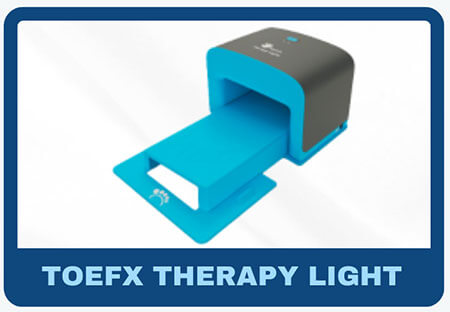
The ToeFX Therapy light is a cutting-edge medical device, that uses a gentle, safe light-based therapy to target toenail fungus at its source.
It uses photodynamic therapy to target fungal infections beneath the nail. The light penetrates the nail, disrupting fungal cells and stopping them from multiplying. As treatment progresses, this allows healthy nails to grow back. Each session is quick - just 20 minutes every two weeks- and most patients complete their treatment within six months. To help prevent recurrence, ongoing maintenance sessions every 6 to 8 weeks are usually recommended.
Unlike other treatments, ToeFX is:
FDA cleared
Painless: No discomfort during or after treatment.
Drug-free: No pills or harsh chemicals.
Clinically proven: Backed by scientific studies.
Convenient: Bi-weekly treatments for 20 minutes.
Effective: Far more promising than most alternatives.
Why Choose ToeFX Treatment at Our Clinic?
Our clinicians are trained and certified in ToeFX protocols.
We provide a personalized treatment plan to suit your needs.
You’ll be treated in a comfortable, professional setting close to home.
Assessment – We examine your nails and discuss your goals.
Treatment – The nails are first debrided to help with better treatment outcomes. The ToeFX Therapy Light is then applied to your affected nails. Sessions are quick, safe, and painless.
Follow-up – Multiple sessions are usually required for best results. We track your progress and support you throughout your journey.
Most patients begin to see improvement as the healthy nail grows in over time.
Is ToeFX Right for You?
ToeFX may be a great choice if you:
Have toenail fungus and want a safe, effective option
Want to avoid oral antifungal drugs and their side effects
Have tried creams or sprays without success
Want to feel confident showing your feet again
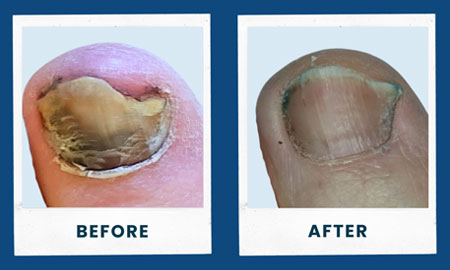
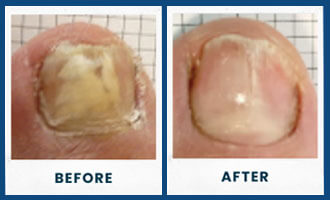
Before and After ToeFX
*The blue is the remaining photoactive serum. This fades away after a few days.
Traditional toenail fungus treatment options like Jublia and Terbinafine have limited effectiveness. Jublia, a topical solution, successfully treats only about 20% of cases and must be applied daily for nearly a year. Terbinafine, an oral pill taken daily, cures around 40% of cases but carries risks of serious side effects, including liver toxicity. ToeFX Light Therapy delivers a 73% improvement rate, with no side effects and a significantly shorter treatment period than Jublia.
ToeFx Vs. Laser Therapy
Laser therapy, another type of light-based treatment, has been promoted as a solution for fungal nails. Yet, multiple studies show it is largely ineffective, offering inconsistent results and minimal long-term improvement. In contrast, ToeFX Light Therapy treatment has been clinically proven to improve over 70% of cases, delivering a safe, painless, and dependable option for patients dealing with stubborn nail fungus.
Take the First Step Toward Clear, Healthy Toenails!
Book your ToeFX light therapy treatment at our clinic today!
The PinPointe Laser is a clinically proven laser device to treat toenail and fingernail fungal infections.
After a single treatment, 70-85% of patients experienced improvement.
No risks or side effects (such as liver damage) can be seen with oral anti-fungal medications.
Higher cure rate than topical (20% cure rate) or oral (40% cure rate) anti-fungal medications.
Usually less expensive than the typical course of oral anti-fungal medications.
Convenient, comfortable, in-office procedure.
What is the treatment like and do I need to do anything before or after?
The PinPointe Laser Procedure takes only 20-60 minutes to perform and is usually completely painless.
No anesthetics or pain medication is needed.
No downtime.
Usually, only one treatment is needed.
We usually recommend treating all 10 nails, even if not all nails appear infected. This is because the other nails often carry the fungus within them and could become infected later. We can however treat just one foot or hand if the other side appears completely normal and you do not wish to prevent infection on the other side.
What can I expect after my treatment?
After the PinPointe Laser kills the fungus in your nails your new nail growth should grow in normally. Since toenails take 12-18 months to grow out and fingernails 6-9 months, your nails may not look improved until months after your treatment. It could take over a year for your big toenail to look completely normal, less time for other nails. You should see gradual improvement starting at the base of your nails, within 1-3 months.
Some patients may need a second treatment. If no improvement is seen by 6 months or if nails appear to be worsening, we recommend a second treatment. We discount the second treatment if it is performed within 18 months of your first treatment.
Is there anything I can do to prevent re-infection?
Throw away old athletic shoes and slippers or wash with bleach in your washing machine. Wipe the inside of your other shoes with a bleach and water solution. Wear flip-flops in the shower and at the gym. Using topical anti-fungal creams and/or powders after your treatment can also help prevent reinfection. UV light disinfecting devices are also available for your shoes at www.sterishoe.com.
You will receive aftercare instructions that will teach you how to prevent re-infection.
Is there anything I should do prior to my treatment?
Remove your nail polish and clip your nails down as short as possible before you arrive for your treatment.
As an option, you may visit a nail technician prior to your laser treatment and ask her to thin your infected nail(s) to a thickness of 1 mm (only the nails that look infected.) This may increase the chance of cure with Pinpointe Laser treatment to 90-95%. Your debrided nails will be very thin however until new nails gradually replace them and they might be sensitive and prone to breaking for many months, due to their thinness.
Frequently Asked Questions
Q: How does the PinPointe Nail Laser work? A: The PinPointe Nail Laser kills fungus that lives in and under the nail. The laser light passes through the nail without causing damage to the nail or the surrounding skin. At the time of the procedure, the toenail will not become instantly clear because it takes time to grow out.
Q: What can I expect in the doctor’s office? A: The process begins with a consultation in which your provider, who will explain the procedure that is to be performed and any follow-up visits that may be required.
Q: Is the procedure painful? A: Most patients feel no pain. Some may feel a warming sensation. An isolated few may feel a slight pinprick.
Q: Is there a recovery period? A: No. The treatment is a walk-in/walk-out procedure.
Q: How long does the procedure take? A: The PinPointe Nail Laser procedure typically takes about 20 minutes.
Q: Will the fungus grow back? A: The infection improves after one treatment. However, there is a chance of reinfection because the fungus is present everywhere in the environment. Your will recommend care techniques to help reduce a recurrence of the infection.
Q: When is it safe to paint my nails or have a pedicure following treatment? A: You can apply polish immediately after the treatment. It is important that you remove all nail polish and nail decorations the day before your treatment.
If you'd like to learn more about PinPointe laser treatment, please consult with a podiatrist.

 Request Appointment